

Table of Contents
- Why Finding Clothes That Fit Is Harder Than It Looks
- How to Measure Your Body for Clothing
- How to Find Your Body Shape
- How to Read a Size Chart and Check Garment Construction
- The Benefits of Tailoring Clothes for a Better Fit
- Try-On Tips for Shopping Clothes That Fit Online
- Conclusion
- Frequently Asked Questions
Last Updated: September 21, 2026
Why Finding Clothes That Fit Is Harder Than It Looks
Learning how to find clothes that fit starts with one uncomfortable truth: the number on the tag tells you almost nothing about how a garment will sit on your body. Ready-to-wear sizing has drifted over decades, and the same size can vary by several inches between labels. At Lollie & Co., we hear the same frustration weekly: jeans "fit" in the dressing room and gap at the waist by lunch.
How to Measure Your Body for Clothing
Measuring your body takes about five minutes with a soft tape measure and a mirror. Wear fitted clothing, keep the tape snug but not tight, and stand naturally rather than sucking in.
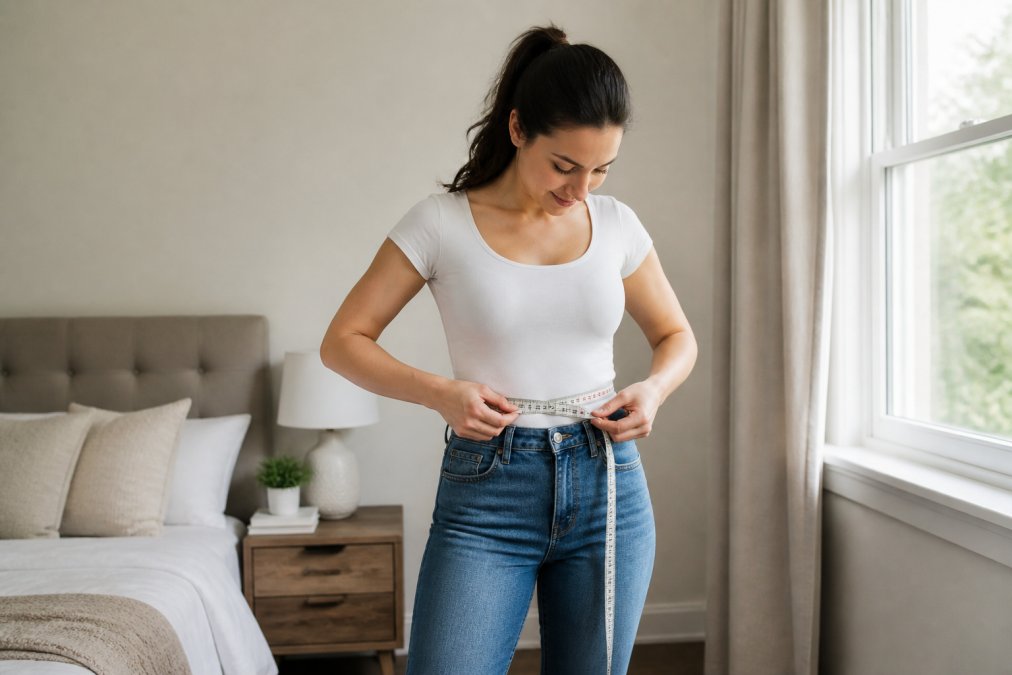
The Five Measurements That Matter Most
Most fit problems trace back to five numbers:
- Bust measurement: the fullest part of your chest, tape parallel to the floor
- Waist: the narrowest point, usually just above the navel
- Hips: the fullest point, roughly 20 cm below the waist
- Shoulder width: from the edge of one shoulder bone to the other
- Inseam: from the crotch seam to where you want the hem to land
Common mistakes: measuring over bulky clothing, or pulling the tape tight, which shrinks every number and leads you to order a size too small.
How to Find Your Body Shape
Finding your body shape comes down to comparing three measurements: shoulders, waist, and hips. Body shape analysis is about proportions, not judgment. Once you know your ratios, you can predict which silhouettes drape well before trying them on.
The Four Common Body Shapes
Most women fall into one of four broad categories:
- Rectangle: shoulders, waist, and hips are close in width, with little waist definition
- Pear: hips are noticeably wider than shoulders
- Inverted triangle: shoulders are wider than hips
- Hourglass: shoulders and hips are balanced with a defined waist
Your waist-to-hip ratio is the most useful number here. Structured garments with defined seams flatter rectangles and hourglasses, while pear and inverted triangle shapes do best with pieces that balance the wider half. Fabric matters too: stiff denim holds a silhouette, while fluid knit follows your natural drape.
How to Read a Size Chart and Check Garment Construction
Reading a size chart properly means matching your measurements to the garment's, not your usual size. But the chart is only half the story; the other half is construction. Two shirts can list identical bust measurements and still fit completely differently because of ease, seam placement, and fabric behavior.
Start With the Garment's Flat Measurements
Most size charts list body measurements (what the brand assumes you measure), not garment measurements (what the actual piece measures). When a listing provides flat measurements, use them. Lay a garment you already love flat, measure it pit-to-pit, and compare that number to the listing. This bypasses vanity sizing entirely because you're comparing fabric to fabric, not label to label.
Key flat measurements to compare:
- Pit-to-pit: doubled gives you the chest circumference of the garment, not your body
- Front rise: the distance from the crotch seam to the top of the waistband in front
- Back rise: usually 1-2 inches longer than front rise on women's pants; a short back rise causes the waistband to gap when you sit
- Inseam: crotch seam to hem; compare to your own inseam measurement, not your height
- Sweep: the total opening at the hem of a top or the leg opening of a pant
Ease: The Number Nobody Talks About
Ease is the difference between your body measurement and the garment's. A fitted blazer might have 2 inches of ease at the bust; an oversized sweater might have 6. Without knowing the intended ease, a size chart is just a number. If a brand lists a 38-inch bust for a medium and you measure 36, that's 2 inches of positive ease, likely slim.
Shoulder Seams, Hemlines, and Inseam
Three construction details reveal whether a garment will fit before you buy:
- Shoulder seams: they should sit at the edge of your shoulder bone, not hang past it. On a structured jacket, a dropped shoulder seam changes the entire silhouette and cannot be tailored back without rebuilding the armhole.
- Hemlines: check where the hem lands relative to your proportions, not the model's. A top that hits at the hip bone on a 5'9" model may hit at mid-thigh on a 5'2" frame.
- Inseam: compare the listed inseam to your own measurement. A 28-inch inseam on a 5'4" frame lands at the ankle; on a 5'9" frame it lands above it.
Fabric Science: Why Drape Changes Everything
Fabric composition determines how a garment hangs, and it's the most overlooked variable in fit. Stiff 100% cotton denim holds a silhouette and resists stretching at the waist, which is why rigid jeans often gap less than stretch jeans over time. Fluid rayon or silk charmeuse follows your curves and can make a garment feel looser than its measurements suggest.
Seam Allowance and Tailorability
Before you buy, look at the seam allowance, the fabric between the stitch line and the raw edge inside the garment. A generous seam allowance (5/8 inch or more) gives a tailor room to let a garment out; a narrow one (1/4 inch, common in fast fashion) means it can only be taken in. If you're between sizes and plan to tailor, buy for the largest measurement and confirm the seam allowance allows it.
The Benefits of Tailoring Clothes for a Better Fit
The benefits of tailoring clothes come down to one idea: a small alteration turns a "close enough" garment into one that looks made for you. Taking in a waistband, shortening a hem, or adjusting a shoulder seam is often the difference between clothes you tolerate and clothes you reach for daily. But the practical benefits are only half the story; the other half is emotional, and most fit guides skip it.
The Psychology of Fit: Why the Tag Lies to You
Vanity sizing has quietly reshaped how women feel about their bodies. A size 8 from one brand is a size 12 from another, and the number on the tag has drifted upward for decades across most American retailers. The result is a quiet, persistent anxiety: if the number doesn't match what you expect, the problem must be you.
Two reframes help:
- The tag is a manufacturing decision, not a verdict on your body. Brands size for their target customer, not for a universal standard. A size 10 at one label and a size 6 at another can measure identically.
- A tailor works on garments, not bodies. A good tailor asks what you want the piece to do, not what size you are. You can walk in with a garment and a goal ("I want this to stop gaping at the back") and never discuss your body at all.
What a Tailor Can and Cannot Fix
Not every alteration is possible, and knowing the limits saves money and disappointment:
- Easy: hemming pants, shortening sleeves, taking in a waistband, tapering a leg, replacing a button
- Moderate: taking in side seams, shortening a lined jacket, adjusting a shoulder seam on an unstructured garment
- Difficult or impossible: letting out a garment with narrow seam allowances, restructuring a lined blazer's shoulders, changing a garment's rise, resizing more than one size down
Tailoring as a Sustainable Fit Solution
The most sustainable garment is the one you already own. Tailoring is the rare fit strategy that also reduces waste: instead of replacing a piece that almost works, you extend its life and get more wear from what's already in your closet. Each alteration keeps a garment in rotation for years instead of months.
Try-On Tips for Shopping Clothes That Fit Online
Shopping for clothes that fit online works when you treat it like a fit check, not a guess. Start with your five measurements, filter by the size chart, and read the fabric composition and construction notes before you commit.
| Fit Problem | Likely Cause | Fix |
|---|---|---|
| Waist gaps at the back | Rise too low for your proportions | Choose a higher rise or tailor the waistband |
| Hem drags on the floor | Inseam longer than yours | Hem to your measured inseam |
| Shoulders pull or droop | Shoulder seam misaligned | Size to shoulder width, then tailor |
| Tight through the hip | Fabric has low stretch | Check fabric composition for spandex content |
Conclusion
Getting clothes that fit is a skill, not luck, and it starts with your own measurements rather than the number on a tag. When you know your proportions and read construction details carefully, shopping becomes faster and far less frustrating.
Frequently Asked Questions
How can I accurately measure my body for clothing?
Use a soft tape measure and wear light clothing or undergarments. Keep the tape snug but not tight. Measure your bust at the fullest point, waist at the narrowest part (usually above the belly button), and hips at the widest point. For jeans, also note your inseam from crotch to hem. Write these numbers down and compare them to each brand's size chart, because sizes vary. Re-measure every few months if your weight fluctuates.
Why do clothes fit differently across different brands?
Brands use different fit models, grading rules, and fabric compositions. A size 8 at one label may match a size 10 elsewhere. Vanity sizing also plays a role: some brands label larger measurements as smaller sizes to make shoppers feel better. Fabric stretch matters too. A jean with 2% spandex will fit differently than 100% cotton. Always check the specific size chart and garment measurements before buying.
What should I look for when shopping for clothes that fit?
Check shoulder seams first. They should sit at the edge of your shoulder, not hang off. For pants, look at the front rise and inseam. A mid-rise around 9 to 10 inches works for many body types. Also read fabric composition: a blend with a small amount of spandex adds comfort. Finally, buy for your largest measurement and plan to tailor the rest. That approach saves money and frustration.
How do I know if a garment is tailored correctly?
A well-tailored garment lies flat against your body without pulling or gaping. The shoulder seams align with your shoulder points, the hemline is even, and you can move your arms without the fabric bunching. For pants, the waistband should sit comfortably without a belt digging in, and the hem should break once at the shoe. If you see wrinkles radiating from stress points, it needs adjustment.